
The Pagan-Bro Delusion
How Nietzsche, Spengler, and Evola Undermine the Very Civilization They are Reckoned to Salvage.

Introduction
In an age of civilizational anxiety, a new “pagan revival” has emerged online—promising strength, order, hierarchy, and a return to ancestral vitality. Its prophets are not warriors or statesmen, but writers: Friedrich Nietzsche, Oswald Spengler, and Julius Evola.
They are invoked as champions of nationalism, defenders of Western identity, and enemies of modern decay. Yet a closer reading reveals a striking paradox. Nietzsche despised nationalism and mocked anti-Semitism as a disease. Spengler dismissed Christianity as a foreign intrusion while unknowingly building his philosophy on currents shaped by Jewish thought. Evola rejected the nation-state altogether in favor of a transnational spiritual elite, drawing heavily from esoteric and occult traditions far removed from any coherent political order. What, then, is being revived? Not a stable alternative to modernity, but a fragmented, contradictory, and deeply anti-Christian metaphysic—one that, far from restoring the West, dissolves the very foundations of nation, family, and moral order it claims to defend.
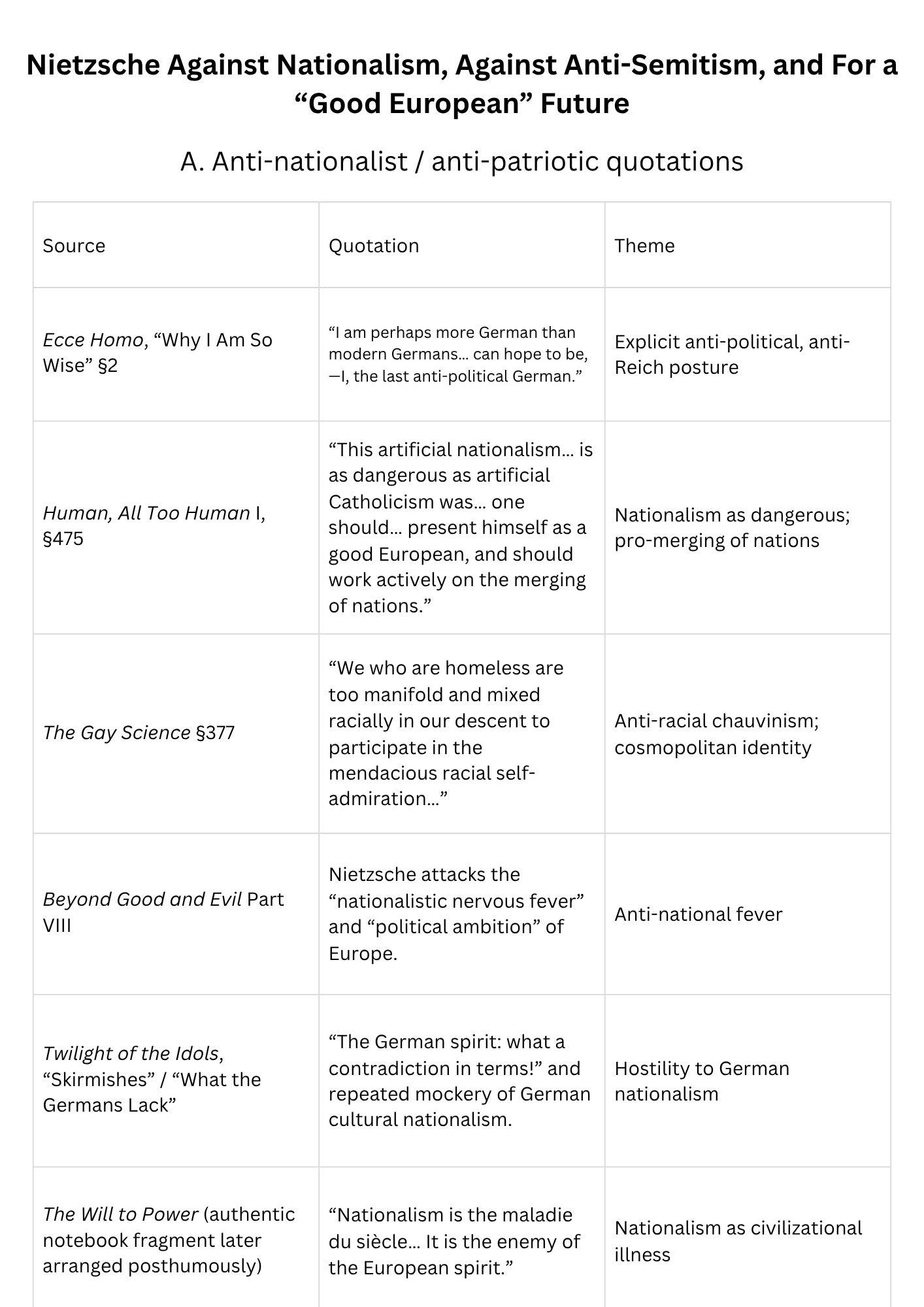
Nietzsche is not a philosopher of nationhood, rooted homeland, or patriotic covenant. He is a philosopher of the post-national “good European” and repeatedly describes nationalism as a pathology.
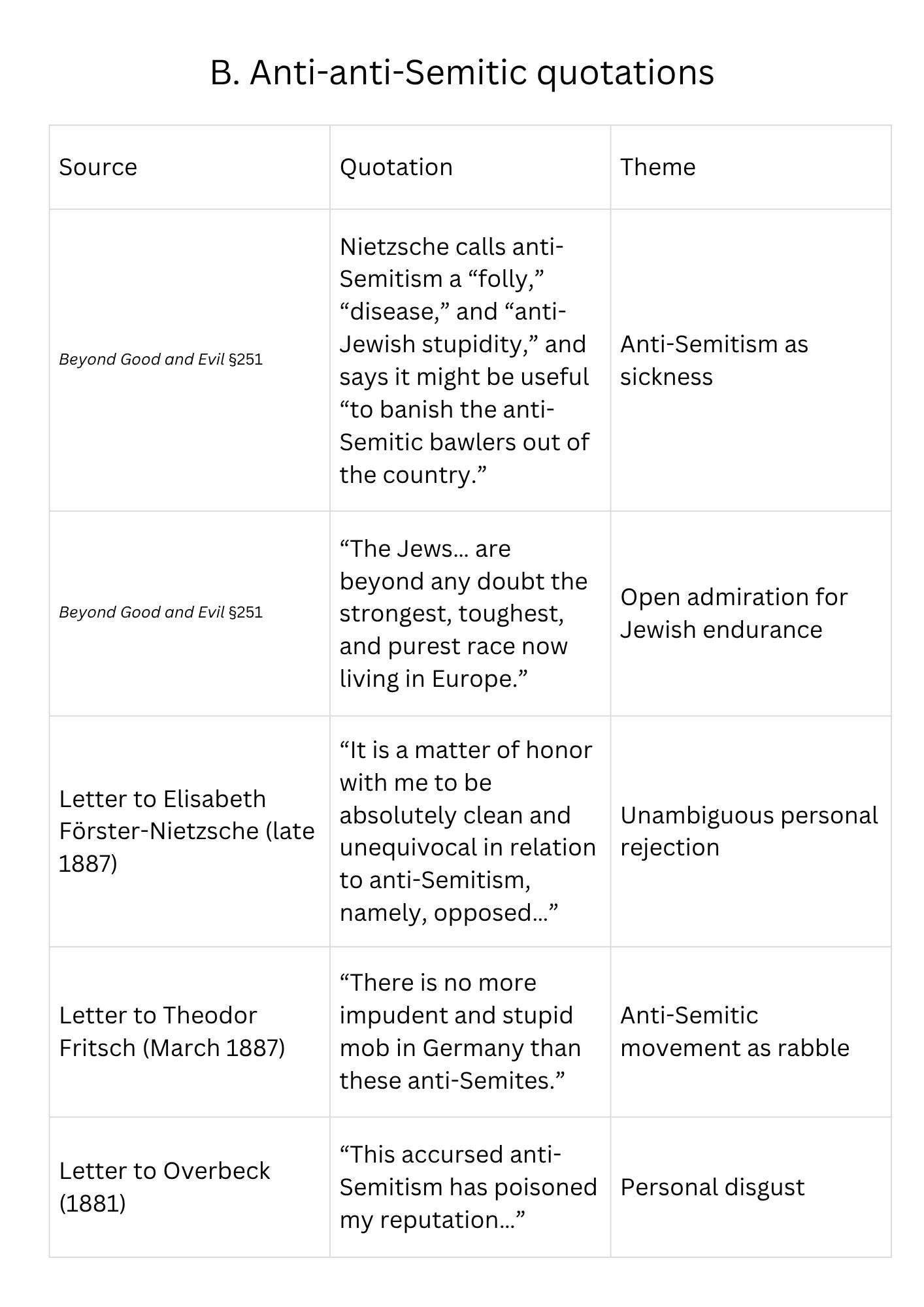
Bottom line: any attempt to deploy Nietzsche as a philosopher of anti-Jewish grievance politics is a direct falsification of the record
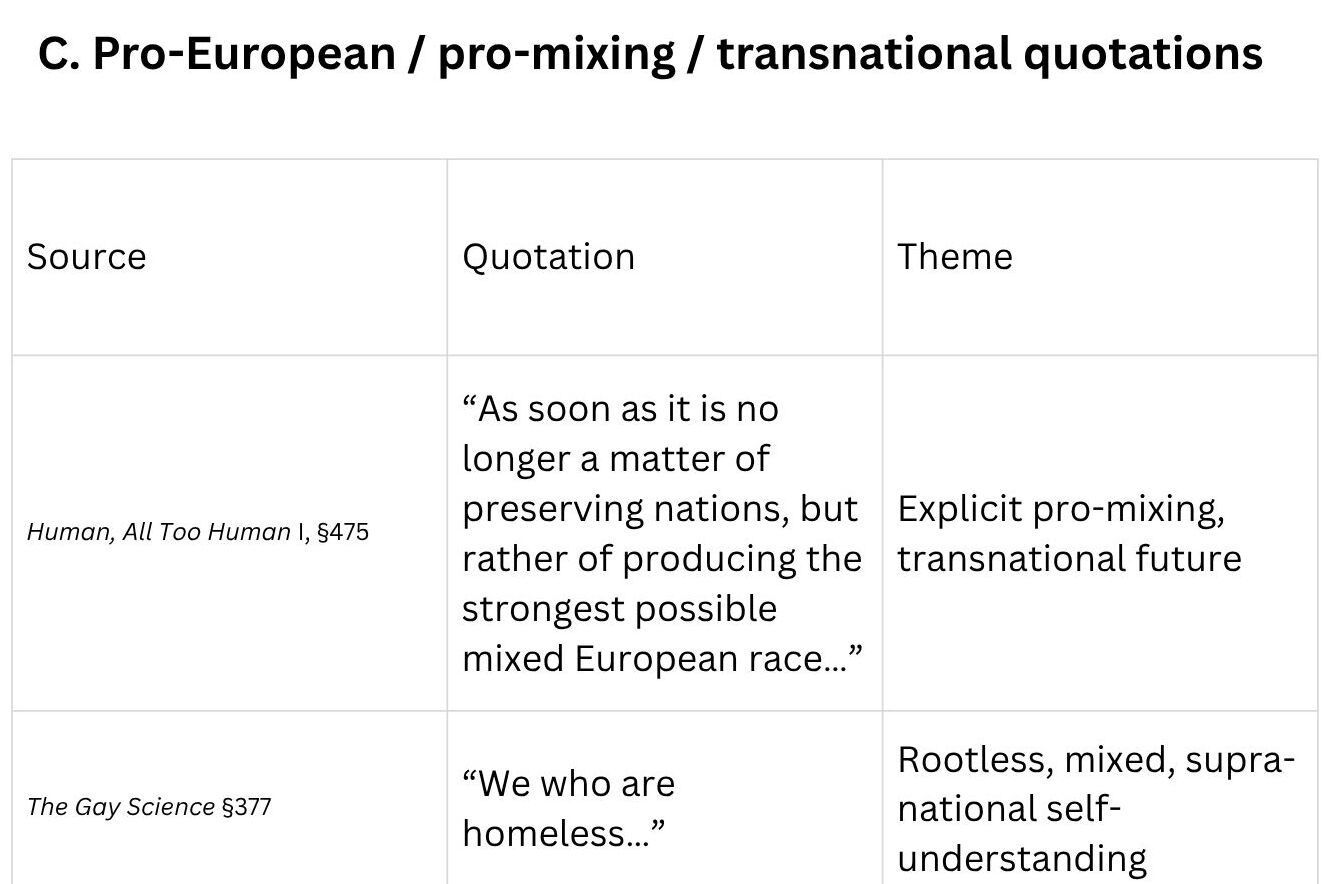
The neo-pagan wants Nietzsche to underwrite border, blood, nation, and ethnos. Nietzsche instead points toward transnational elite Europeanism, mixture, and anti-nationalism.
The Pagan-Bro Contradiction:
Nietzsche, Spengler, Evola—and the Collapse of a False Right-Wing Metaphysic
There is a growing phenomenon within segments of the online right: a romantic return to paganism, myth, hierarchy, and “pre-Christian strength.” At the centre of this movement stand three intellectual idols: Friedrich Nietzsche, Oswald Spengler, and Julius Evola.
They are routinely invoked as prophets of virility, order, nationhood, and civilizational revival against what is perceived as a decaying liberal-Christian West.
Yet when examined closely, this entire intellectual foundation collapses into contradiction.
The very thinkers championed as defenders of strength, nation, and identity systematically rejected nationalism, opposed anti-Semitism ( a trend often implied) embraced transnational or aristocratic globalism, and constructed metaphysical systems rooted not in stable order—but in pagan fatalism, esotericism, and self-deification. Worse still, the philosophical ground laid—especially by Nietzsche—has directly contributed to the very forces the modern right claims to resist: deconstructionism, postmodernism, communism, radical feminism, and transhumanism.
This is not a coherent worldview. It is a patchwork of misread texts, aesthetic longing, and selective quotation—held together by mood rather than truth.
I. NIETZSCHE: THE FALSE PROPHET OF THE PAGAN RIGHT
Nietzsche is the linchpin. Without him, the pagan-bro intellectual structure collapses.
He is celebrated as:
the philosopher of strength
the destroyer of weakness
the defender of hierarchy
the enemy of liberal decay
But this is a selective myth. The real Nietzsche dismantles the movement that idolizes him.
1. Nietzsche Against Anti-Semitism
Nietzsche did not flirt with anti-Semitism—he despised it.
From Beyond Good and Evil §251:
“The anti-Semitic folly… the anti-Jewish stupidity… it would perhaps be useful… to banish the anti-Semitic bawlers out of the country.”
He goes further:
“The Jews… are beyond any doubt the strongest, toughest, and purest race now living in Europe.”
In private correspondence, he is even more explicit:
“It is a matter of honor with me to be absolutely clean and unequivocal in relation to anti-Semitism… opposed, as I am in my writings.”
He calls anti-Semitism:
a disease
a political infection
a stupid mob movement
He broke with his own sister over it. He rejected its leading figures. He openly mocked those who tried to appropriate his philosophy for racial politics.
And yet—this is the philosopher the pagan-bro elevates while often flirting with anti-Jewish sentiment.
The contradiction is total.
2. Nietzsche Against Nationalism
The second collapse is just as devastating.
Nietzsche did not defend nationalism. He attacked it relentlessly.
From Human, All Too Human §475:
“This artificial nationalism… is dangerous… one should work actively on the merging of nations.”
From The Gay Science:
“We who are… mixed racially… cannot participate in racial self-admiration.”
From Ecce Homo:
“I… the last anti-political German.”
Nietzsche called nationalism:
a sickness
a nervous fever
petty and vulgar
His ideal was not the nation-state—it was the “good European”, a transnational elite beyond borders.
In modern terms, Nietzsche’s vision aligns far more closely with:
cosmopolitan elitism
post-national identity
cultural hybridization
—not with nationalist revival.
3. Nietzsche’s Metaphysical Legacy: The Destruction of Order
Here lies the deeper issue.
Nietzsche did not simply critique Christianity. He dismantled the foundations of reality itself:
No objective truth → only interpretation
No objective morality → only power
No fixed human nature → only becoming
No transcendent order → only will
This is not conservatism. It is metaphysical dynamite.
And the fruit of that dynamite is visible across the modern world
Nietzsche did not build a new order—he removed the possibility of order.
This is why thinkers like C. S. Lewis warned of “men without chests,”
why Jacques Maritain said:
“By killing God he killed man,”
and why Karl Barth insisted Nietzsche exposed false religion—but not the living God.
4. The Verdict on Nietzsche
Nietzsche diagnosed decay—but his solution was poison.
The pagan-bro treats him as a builder of civilization.
In reality, he is one of its most powerful deconstructors.
II. SPENGLER: THE IRONY OF A “MAGIAN” CRITIC
If Nietzsche detonates truth, Spengler attempts to map the ruins.
He is often presented as:
a prophet of Western decline
a defender of civilizational identity
a critic of liberal modernity
But again—the contradictions emerge.
1. Spengler Rejects Christianity as “Magian”
Spengler explicitly classifies Christianity as foreign:
“The scheme… was a creation of the Magian world-sense… Persian and Jewish.”
Christianity, for him:
is not Western
is not native
is an imposed “pseudomorphosis”
He even claims:
“Christian theology is the grandmother of Bolshevism.”
So the pagan-bro adopts Spengler to defend the West—
while Spengler denies Christianity as the foundation of the West.
2. Spengler’s Intellectual Lineage: A Hidden Dependency
Here the irony becomes staggering.
Spengler himself admits:
“The philosophy of this book I owe to… Goethe… and also… Nietzsche.”
But Goethe’s thought is deeply shaped by Jewish intellectual and mystical traditions:
Lurianic Kabbalah → cosmic striving, fragmentation, restoration
Spinoza → pantheism (God = nature)
Mendelssohn → Enlightenment humanism
Goethe’s Faust, the template for Spengler’s “Faustian civilization,” reflects:
infinite striving
cosmic fragmentation
human participation in redemption
—all themes strongly aligned with Kabbalistic metaphysics.
Thus the lineage becomes:
Kabbalah → Spinoza → Goethe → Spengler
And yet Spengler rejects Christianity as “Jewish”—
while unknowingly inheriting Jewish metaphysical frameworks.
3. Spengler’s Fatalism: Pagan, Not Christian
Spengler’s worldview is fundamentally:
cyclical
deterministic
fatalistic
Civilizations:
rise
flourish
decay
die
No redemption.
No resurrection.
No providence.
This is not Christian—it is ancient pagan fatalism.
Christian thinkers like Christopher Dawson and Eric Voegelin saw this clearly:
Dawson: Christianity created the West
Voegelin: Spengler suffers from “pneumopathology”—spiritual blindness
4. The Verdict on Spengler
Spengler:
rejects Christianity as foreign
builds his system on thinkers shaped by Jewish mysticism
offers fatalism instead of hope
He is not a restorer of civilization.
He is a poet of decline without redemption.
III. EVOLA: THE GLOBALIST PAGAN ARISTOCRAT
Julius Evola is often treated as the most “hardline” of the three.
He is invoked as:
anti-modern
anti-liberal
hierarchical
traditional
But again—the deeper reality is the opposite of what is claimed.
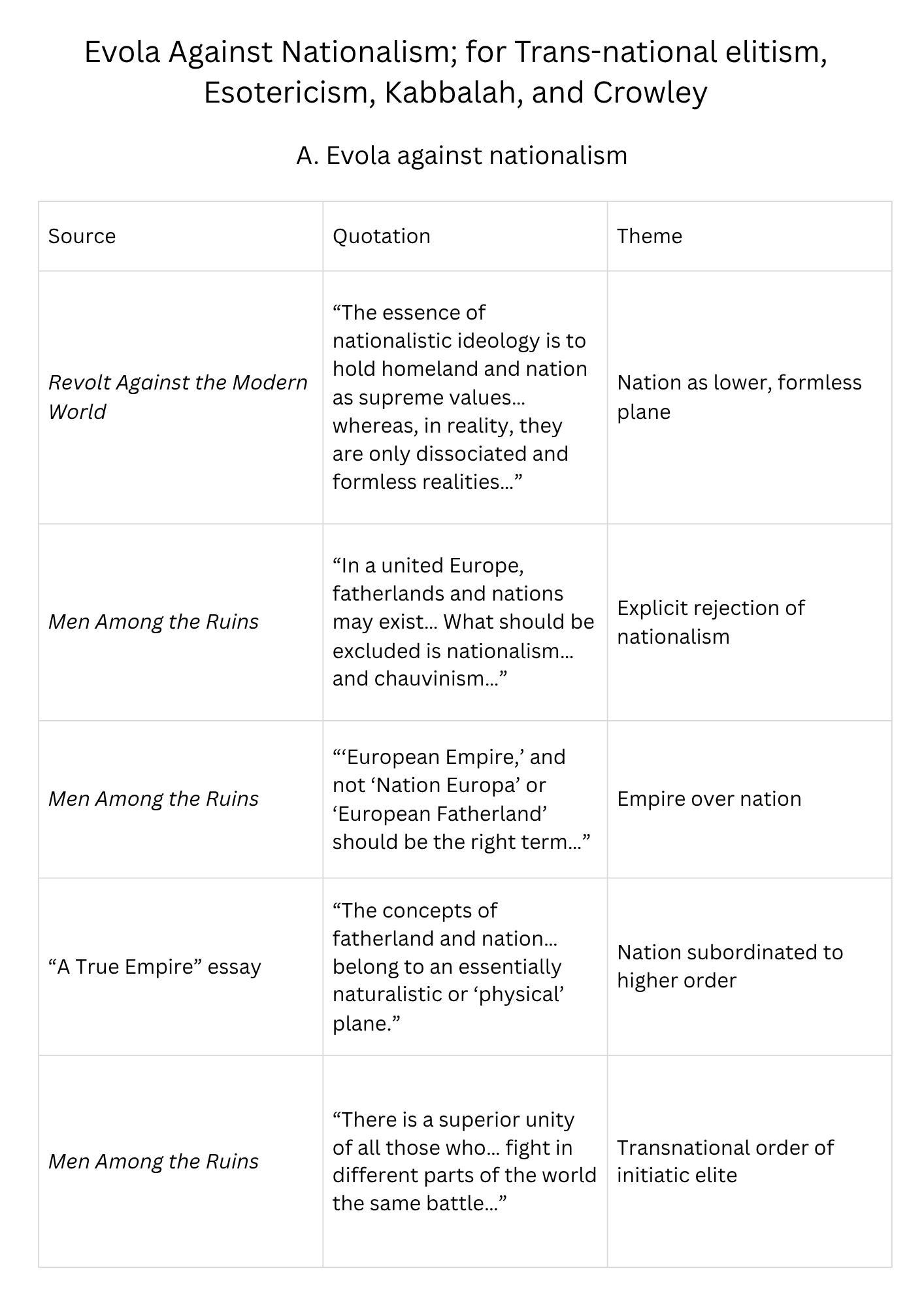
1. Evola Rejects Nationalism
From Revolt Against the Modern World:
“Nationalism… is a formless reality… lacking true hierarchical principle.”
From Men Among the Ruins:
“What should be excluded is nationalism… chauvinism…”
Evola’s vision is not national—it is imperial and transnational:
a European Empire
ruled by a spiritual elite
detached from ethnic sovereignty
He writes of:
“transnational groupings… preserving the ideal of the Imperium.”
This is not nationalism.
It is elitist globalism.
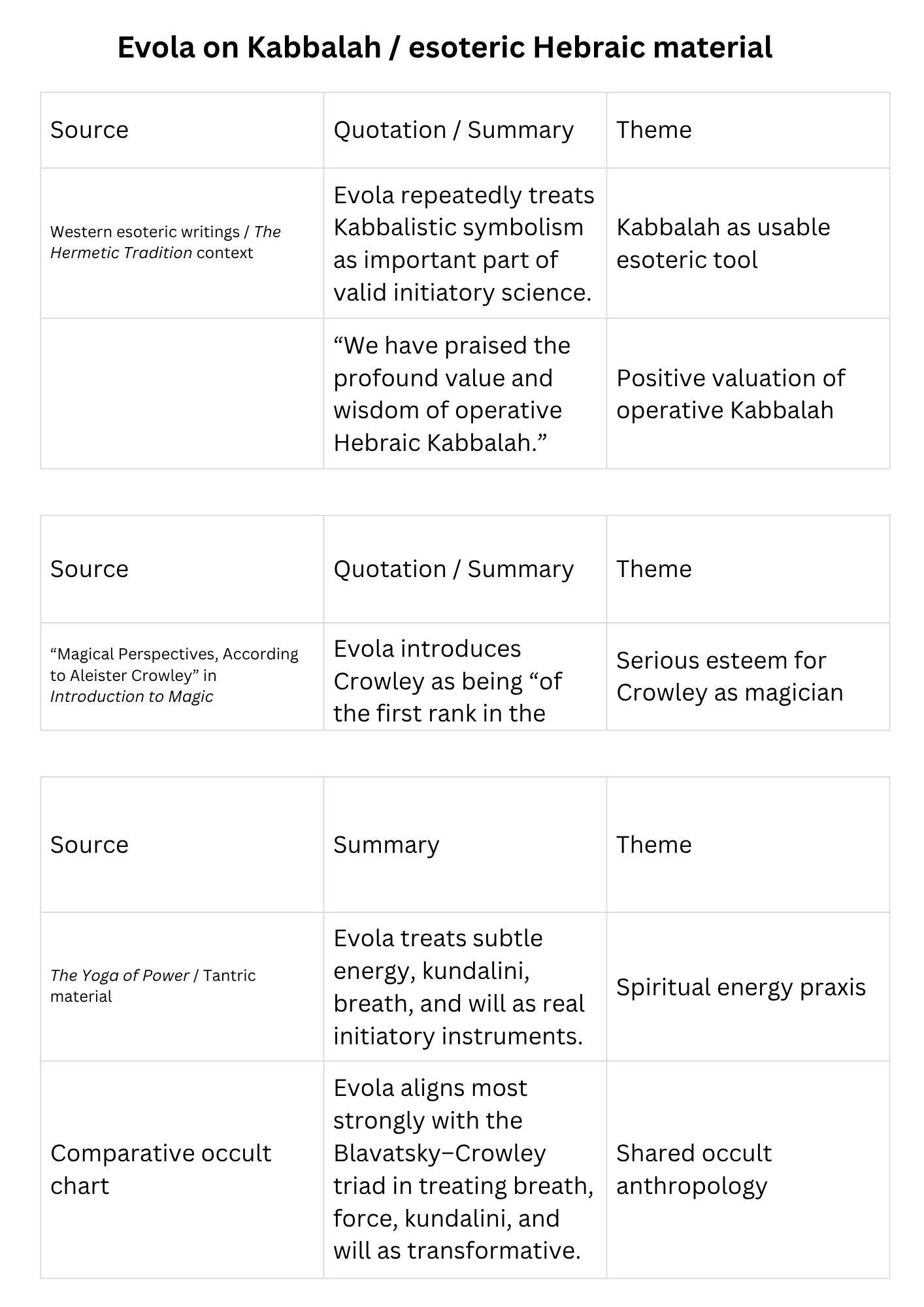
2. Evola’s Esoteric Foundations
Evola’s system is not political—it is occult.
He draws from:
Kabbalah
Hermeticism
Tantric left-hand path
Aleister Crowley
He even writes:
“We have praised the profound value… of operative Hebraic Kabbalah.”
And on Crowley:
“of the first rank in the field of magic.”
This is crucial.
The pagan-bro claims:
anti-Christian
anti-Jewish
Yet Evola embraces:
Kabbalistic metaphysics
Jewish esoteric symbolism
occult systems derived from those traditions
3. The Crowley Connection: Fruit of the Tree
Crowley—whom Evola admired—represents the fruit of this system:
ritual sex magic
drug addiction
blasphemy
self-deification
moral inversion
His motto:
“Do what thou wilt shall be the whole of the Law.”
This is not order.
It is radical antinomianism.
Christ’s test applies:
“You will know them by their fruits.”
The fruit is not civilization—it is dissolution.
4. The Verdict on Evola
Evola:
rejects nationalism
promotes transnational elite rule
embraces occult systems rooted in Kabbalah
endorses figures like Crowley
He is not a defender of tradition.
He is a reviver of esoteric pagan elitism.
IV. THE FINAL CONTRADICTION
The pagan-bro claims to defend:
nation
family
order
identity
But his intellectual heroes:
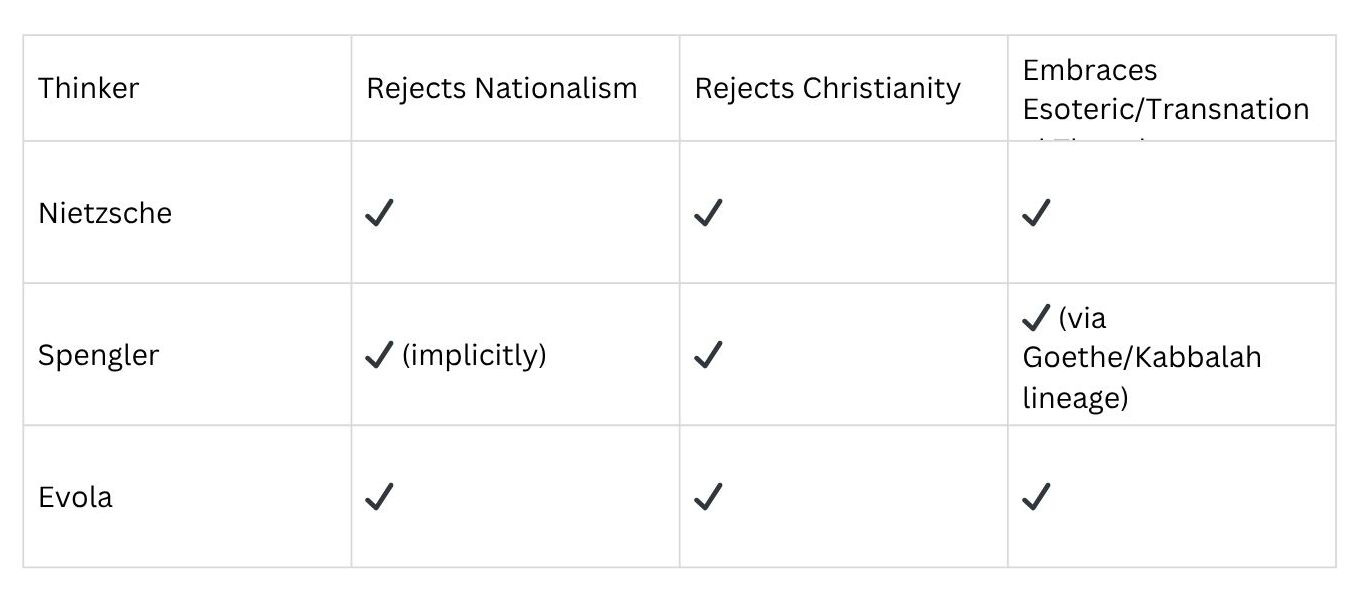
Even worse:
Nietzsche condemns anti-Semitism
Spengler builds on Jewish-influenced thought
Evola embraces Kabbalah
The movement:
talks race → its thinkers reject it
talks nationalism → its thinkers oppose it
talks anti-Jewish → its thinkers contradict it
This is not coherence.
It is intellectual collapse.
V. THE CHRISTIAN ALTERNATIVE
Christianity alone provides:
nation under God (Acts 17:26)
family as sacred order
marriage as covenant
human dignity rooted in creation
moral law grounded in God
It does not:
dissolve identity
erase nations
deconstruct reality
It orders them.
Where Nietzsche dissolves truth—
Christianity grounds it.
Where Spengler offers fatalism—
Christianity offers resurrection.
Where Evola offers occult elitism—
Christianity offers redemption for all.
CONCLUSION: TEST THE FRUIT
The neo pagan revival is built on:
misread philosophers
contradictory foundations
esoteric fragments
Its heroes:
reject what it claims to defend
undermine what it seeks to build
Christ gives the final test:
“You will know them by their fruits.”
Nietzsche’s fruit:
nihilism
deconstruction
fragmentation
Spengler’s fruit:
fatalism
despair
Evola’s fruit:
occultism
elitism
Christianity’s fruit:
civilization
order
dignity
redemption
The choice is not between strength and weakness.
It is between:
a collapsing pagan illusion
and
the living foundation of Christ
And only one of these has ever built—and sustained—a civilization.